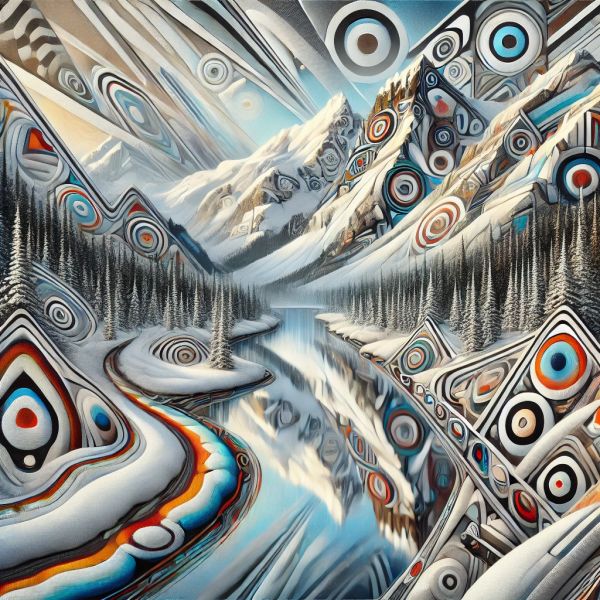
Captivating Cubist Interpretation of Mount Steele and Indigenous Artistry
Awash in icy blues and snowy whites, the canvas vibrantly reflects Mount Steele's majestic presence amidst the swirling patterns distinctive of First Nations motifs. The painter integrates Cubist influences seamlessly, fracturing the landscape into dynamic, abstract shapes that convey the mountain's rugged texture and formidable scale. As the viewer's eye travels across the canvas, they are drawn into a surreal, stylized wilderness that hints at both the physical reality and the spiritual significance of this natural monument. The incorporation of First Nations cultural symbols within the cubist forms serves as a bridge between traditional indigenous arts and modernist aesthetic explorations, crafting a narrative that is both visually compelling and culturally resonant. This artistic fusion not only pays homage to the mountain's grandeur but also to the deep-rooted cultural heritage of the First Nations peoples associated with the region. The painting invites contemplation on the interconnectedness of art, nature, and history, making it a profound statement piece for any collection. *** About Mount Steele: Mount Steele stands as the fifth-highest peak in Canada, towering at 5,073 meters. Located in the Saint Elias Mountains within the Kluane National Park of Yukon, it is part of an enchanting range that includes some of North America's highest peaks. Named after Sam Steele, a prominent figure in the region’s early Canadian Mounted Police, Mount Steele offers a significant challenge to mountaineers due to its remote location and harsh climatic conditions. Its icy facade and steep inclines represent not just a physical, but a metaphoric pinnacle, enveloped in the awe-inspiring vastness of the Canadian wilderness. The mountain holds particular esteem amongst adventure seekers and nature enthusiasts alike.
Image ID: 50926
|

 Canvas Prints
 Fine Art Printing
 Framed Prints
 Plaque Mounting
 Fabric Printing
 Metal & Wood Prints
 Plexi Face Mount
 Print & Dry Mounting
 Cityscape Prints
 Greeting Cards
 Classical Art Prints
 AGP Galleries

 Custom Picture Frames
 Canvas Floaters
 Wood Frames
 Metal Frames
 Canvas Transfer
 Custom Stretcher Frames
 Custom cut MatBoards
 Custom Plexi Cuts
 Custom Size Boards
 Pre-Cut Boards
 Framing Hardware
 Upload Your Photos
 Ideas Gallery
 How it works?
  Artwork Scanning
 Laser Engraving & Cut
 Coffee Mug Prints
 Acrylic Blocks
 T-shirt Prints
 Handmade Oil Paintings
 All Products
 Custom Artist Canvas
 Custom Size Wood Panels
 Canvas Stretching Services
 Resources
 DoveTail Guide
 Aluminum Bars
 Wood Panels
 Stretcher Bars
 Easels & Display
 Resin Coatings
 Cork Rolls/Sheets
 Resin On Canvas
 Price Calculator
 Gift Certificates
 Collages on Canvas
 Word Cloud Design
 Photo Mosaics
 Image Effects
 FAQs
FAQs Pro Accounts
 Artist Gallery Program
 Corporate Art
 Contact KeenART
 Turnaround time
 Shipping
 Rush Orders